Jan. 7, 2010

Over the new-year I wrote this little Free Software (LGPL) app for sketching stuff. It's called SketchThing.

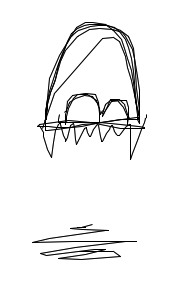
hoverteeth

With the impending proliferation of tablets and touchscreens my plan is to make a sketching app which runs on all kinds of tablet/touch friendly devices and browsers, online and offline, and will sync your sketches to whatever device you are using, wherever you are using it.

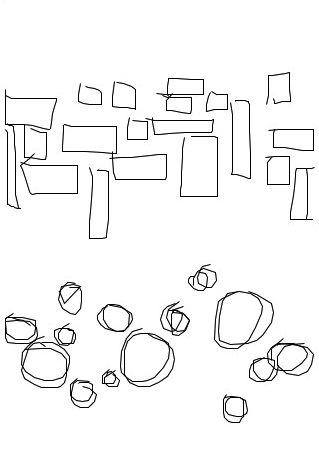
shapewads

At the moment it's running on those Apple portable devices, since that's what I have access to thanks to my contract work for RjDj, and I'm quite glad that I have found a way to make Free Software which runs on those devices legally through the web app method. I hope to port it to at least Firefox, Android, and Chrome OS as well.

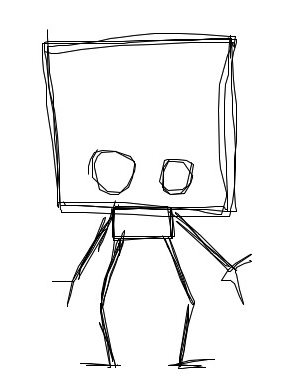
bigsquarerobothead

The core library, sketchthing.js, is device agnostic and should run on anything which supports HTML5, such as Firefox and Webkit. What the library does is take an arbitrary HTML element as an input, and then replace it's innerHTML with a canvas of the same size which can be sketched upon.

Have fun.

Dec. 19, 2009

Ever since i read it listed in the copyright notice in the source code of the program Backupninja, I have been thinking over this statement:

"ownership is theft."

Obviously a very marginal viewpoint in this day, the general implication is that by owning something, anything, you are depriving others of that object, land, or resource.

I believe that this will one day reflect the majority viewpoint of the world, and that this will come to pass because of technological progress.

At the moment, much of the world is in the middle of idealogical turbulence over the nature of intellectual property - the ownership of ideas and virtual 'things' like computer programs and audiovisual data. Despite the best efforts of those with a vested interest in a view that is contrary to a reality where you can freely copy and share ideas and virtual goods, the popular consensus seems to be slowly settling on the belief that copying and sharing are not theft.

Pretty soon there is going to be another slow revolution around the idea of property, only next time it's going to concern physical goods, not virtual ones.

The germination of this impending revolution has already begun. A special kind of tinkerer is working away in their room, homebrewing crude rapid prototyping machines. These are machines that can take something virtual, and turn it into something physical. These machines are as rough at making objects as a young Microsoft was at making software, but like operating systems, they will get better and better. Eventually you will be able to print a pretty convincing pair of shoes, or cutlery set, or mp3 player. There are already startups commercialising this technology despite its infancy.

Coming at the same target from an industrial angle is the field of nanotechnology. We've long been promised Von Neumann self assembling machines, but mostly it's only delivered sunblock. And a heap of other great stuff, just not yet tiny robots. But we will have programmable self assembling stuff, and when we do, we won't know how we lived without it.

Anyway, the point is that we will eventually, probably sooner than you imagine, be able to make physical things, widgets, and objects as easily as we make software and digital data now. And we will be much, much better at software by then too.

Not only this, but there will be media surfaces everywhere. Electronic ink, bendable/wearable displays and screens will get cheap to the point that almost everything will be a display and almost everything will be an audio system. When that happens we won't always need to browse or to go into virtual worlds and social networking sites, but the virtual will come out here to meet us in reality, to augment our reality.

Through those processes much of what we think of as virtual will suddenly become very real, and we will exist in a world where just about everything important is copyable, trivially. The only way to truly own something in our old sense of the word will actually come to mean depriving others of a thing.

It's then that it will become obvious that ownership is theft.
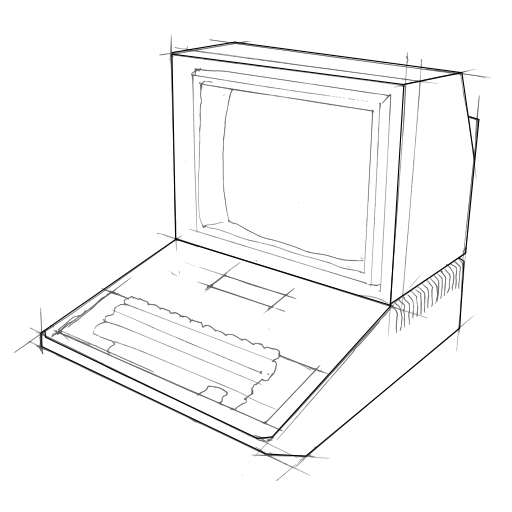
Dec. 11, 2009

Observe the following technological trends:

  • Digital photo frames getting larger and cheaper
  • Electronic paper (e.g. e-book readers)
  • Phones with real operating systems
  • Tablets
  • WiFi and wireless broadband
  • Pico projectors

The internet is leaving the stuffy confines of the PC and coming out to meet us in the real world. Virtual reality is dead, and augmented reality killed it.

Case in point: the small cafe near the office where I worked for RjDj in London didn't have chalk boards. Instead it had three large LCD screens listing its menu and specials.

Pretty soon, a whole lot more surfaces will become little windows into the internet.

Oct. 30, 2009

Here are some maddest of props for two great little bits of software we've been using for RjDj work lately, and which might not be that well known yet.

Flot

Flot is a really nice little jQuery library which does exactly what it says on the box: draws charts. It strikes a very nice balance between smart, easy defaults, and being customisable.

http://code.google.com/p/flot/

South

South helps you with database migrations in Django. Database migrations are where you have made your models and deployed them live on the server, including having your SQL tables created, but now you want to change something. People who are used to the flexbility of Python find this situation frustrating. Instead of having to manually write SQL to upgrade your tables to match your new models, South will magically do the hard work for you. What's more is it will have that work represented as Python code which you can customise, modify, and version in your repository. Once again it strikes that balance between doing the right thing and being customisable.

http://south.aeracode.org/

Honorable mention

The rest of our web stack looks like this: Debian GNU/Linux, lighthttpd, python, django, lame, oggdec, postgresql, mysql, wordpress, phpbb3, boto, and we use bzr for versioning.

Together these make as nice and friendly a collection of Free Software as there ever was. Thanks, Free Software makers! You rule.

Oct. 22, 2009

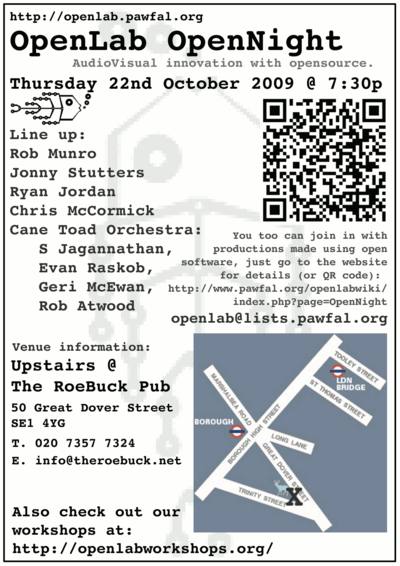
Openlab OpenNight flyer

Thursday 22nd of October, 2009 @ 7:30pm

The Roebuck Pub (SE1 4YG)

  • Rob Munro
  • Jonny Stutters
  • Ryan Jordan
  • Chris McCormick
  • Cane Toad Orchestra

I'm probably going to play a set with my Garage Acid Lab Pd patches, if I can get it together in time.