Ceres from Dawn, February 2015.
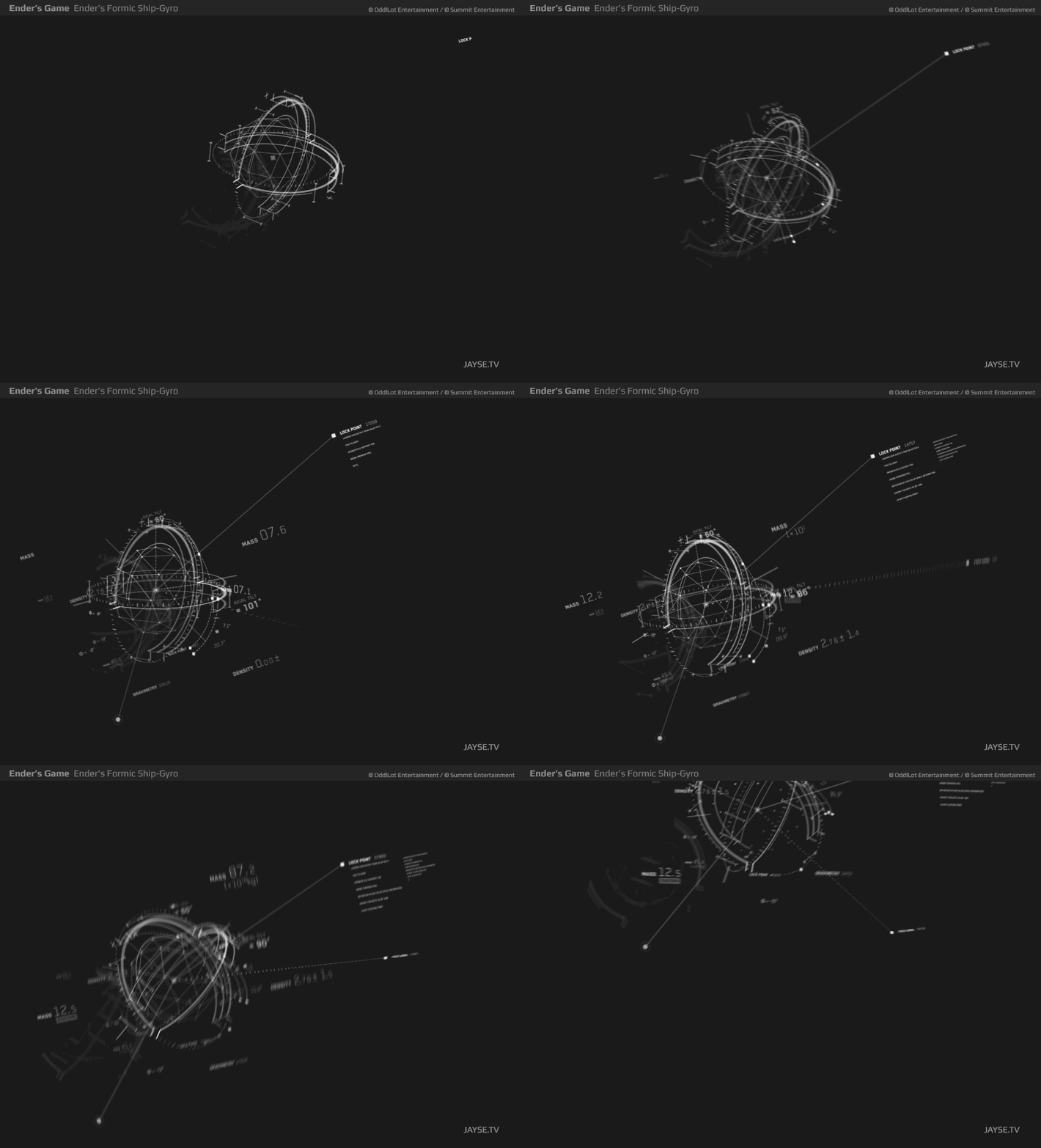
Ender's Game visualization test by Jayse Hansen.
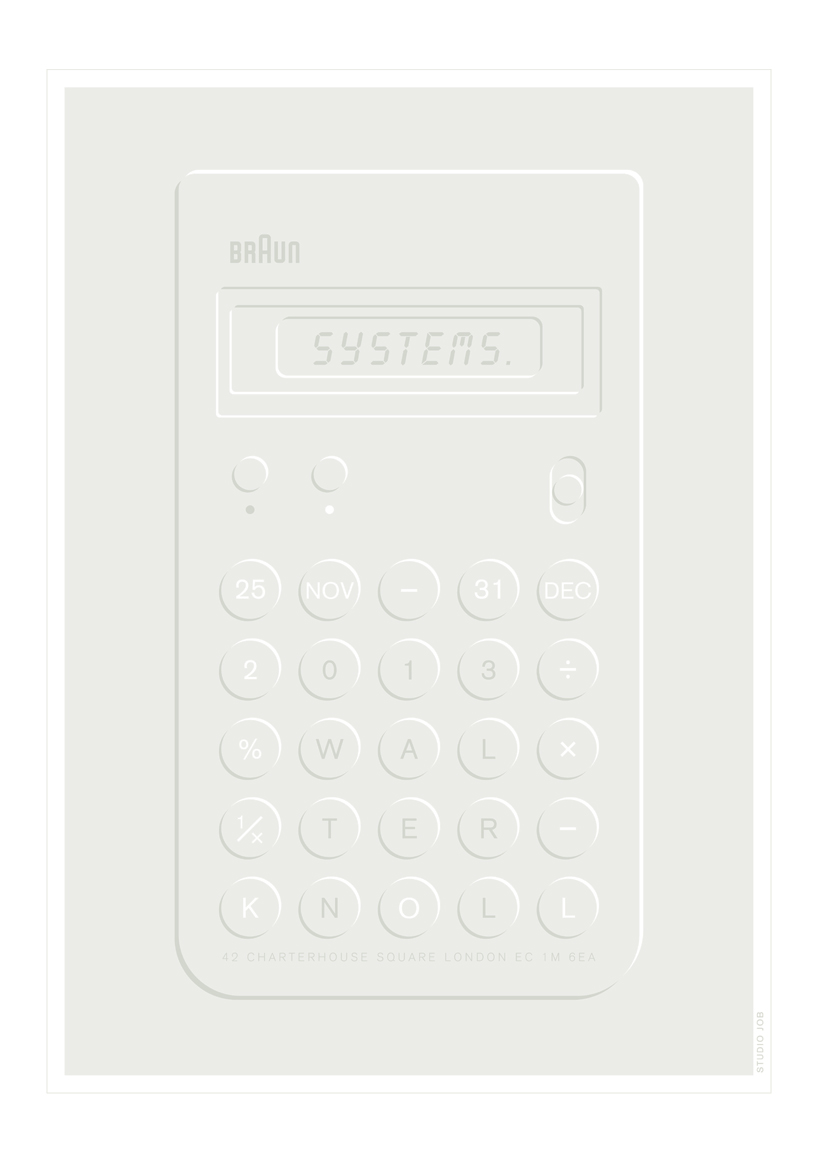
Systems, 1960s Braun design retrospective exhibition poster by Studio Job.
Images I've been inspired by recently!
Ceres from Dawn, February 2015.
Ender's Game visualization test by Jayse Hansen.
Systems, 1960s Braun design retrospective exhibition poster by Studio Job.
Images I've been inspired by recently!
Last weekend was Global GameJam. My buddy Crispin suggested we use Clojure, a non-traditional member of the LISP family running on the Java virtual machine, and its browser-friendly cousin ClojureScript.
Here is the game we built together, using graphics from Kenney.nl:
You can find the source code on GitHub.
A couple of weeks ago I installed Leiningen, the Clojure package/dependency manager, and the VIM plugins, and started practicing.
Literally every night for two weeks now I have been dreaming in parentheses. Writing code has never felt so comfortable. I think I may officially be a LISP convert.
I am really excited about space probe Dawn's arrival at Ceres on March 6th! Ceres is a dwarf planet in the asteroid belt between Mars and Jupiter. Like many other people I've been eagerly anticipating this part of the Dawn mission for a few years. After a long trip via Vesta, NASA will get higher resolution images of the surface of Ceres from Dawn in the coming weeks.

"Ceres is almost a complete mystery to us," said Christopher Russell, principal investigator for the Dawn mission, based at the University of California, Los Angeles. "Ceres, unlike Vesta, has no meteorites linked to it to help reveal its secrets. All we can predict with confidence is that we will be surprised." via NASA

Hubble Space Telescope images of Ceres, taken in 2003–04 with a resolution of about 30 km. The nature of the bright spot is uncertain. via Wikipedia
We live in an age where there are new and exciting things to learn about every day, but this event really stands out for me. What wonders await us on this new world?
Here is a bit of code I wrote recently for the Gameboy Advance platform. It lets you use the device's buttons to toggle GPIO pins.

Recently I ressurrected LooperAdvance, a bit of 10 year old code for making music with a Gameboy Advance. I am hacking in synchronisation so that I can sync up the loops with Pure Data running on a Raspberry Pi.
The Gameboy Advance has a pretty robust little 4-bit GPIO rated at 3.3v that could be neat for controlling some projects now that you can get them quite cheaply second hand. There are also wireless adapters available that will instantly give you 4 bits of output by remote control.