July 31, 2010

I am ridiculously behind on blogging because of the amount of contract work I have going on at the moment (working Saturdays and weeknights until 2am - not fun!) Anyway, I'll stop whining now.

Below is a video of the talk I gave at PyCon AU at the end of June. In it I talk about my time working for London based "reactive music" company, RjDj, and also about my video game Infinite8BitPlatformer.

I haven't posted an Infinite8BitPlatformer update for ages, and I have been meaning to do so since a lot of progress has been made since my last post, but here's a quick update:

  • Multiplayer code: this is going really well. It's almost at the point of beta release.
  • Contributors: another person has started contributing to the codebase. I am hopefully going to be merging his code this weekend. Julian has put basic chat into the multiplayer code, among other tweaks and bugfixes, and a huge amount of very useful information for other people looking to contribute. He's been very patient about my lack of time!

Anyway, back to work.

June 21, 2010

The Robusness Principle is a good principle for writing network server/client software. If you follow it your software is less likely to fail when interfacing with other software. I also find it to be an optimal heuristic when it comes to interacting with other human beings.

Be conservative in what you do; be liberal in what you accept from others.

-- Jon Postell

I wonder if there is a formal proof that it is an optimally efficient algorithm for interacting entities who don't completely know eachother's context/protocol, from the perspective of information theory?

June 12, 2010

If you want to have some Python libraries installed in your system somewhere other than the standard place ("site-packages"), here's how to do it. This can be useful if you don't want them to interfere with your operating-system installed path, or if you don't want to become root/admin in order to install them.

This problem is solved by things like virtualenv and buildout, but I find that this will suffice for a lot of cases, or if you don't want to learn the ins and outs of those systems.

First, create a directory somewhere for your alternative Python libraries to go into:

$ mkdir ~/my-python-libraries/

You only have to do that step once.

Next, tell future Pythons that we have an alternative path where libraries live by setting an environment variable:

$ export PYTHONPATH=~/my-python-libraries/

This means that Python will check that directory for Python libraries when you try to import them. If you are always using that library path, you could put it in your .profile or .bashrc file so that it is set on login.

Now when you install new libraries, make sure they go into that alternative path:

$ cd some-library
$ python setup.py install --prefix=$PYTHONPATH --install-purelib=$PYTHONPATH --install-platlib=$PYTHONPATH --install-scripts=$PYTHONPATH/bin --install-data=$PYTHONPATH

One good thing to do is make a handy little one-line script which sets the PYTHONPATH variable when you want to start working on a project which needs those libraries. You could put it in ~/bin or in your project's root or scripts/ subdirectory.

You can also make a script in your ~/bin directory which runs the python setup.py command with those command line arguments set and call it something like "install-python-library".

June 3, 2010

I had a hard time finding where I had written this down, and I will almost certainly need it again.

update: More power-of-two fun at Frank's blog with Fast power-of-two modulo.

To find the nearest power of two (linearly) to a given number:

pow(2, int(log(n, 2) + 0.5))

To find the next highest power of two:

int(pow(2, ceil(log(n, 2))))

That's Python code, but pretty much applies in any language. There are some very fast log2 implementations out there if you need them.

Also, if you only have access to log10 in your programming environment (as I did when I worked that out), you might need this:

log2(n) = log10(n) / log10(2)

This is expressed generally as:

logX(n) = logY(n) / logY(X)

(Those two aren't Python code).

May 30, 2010

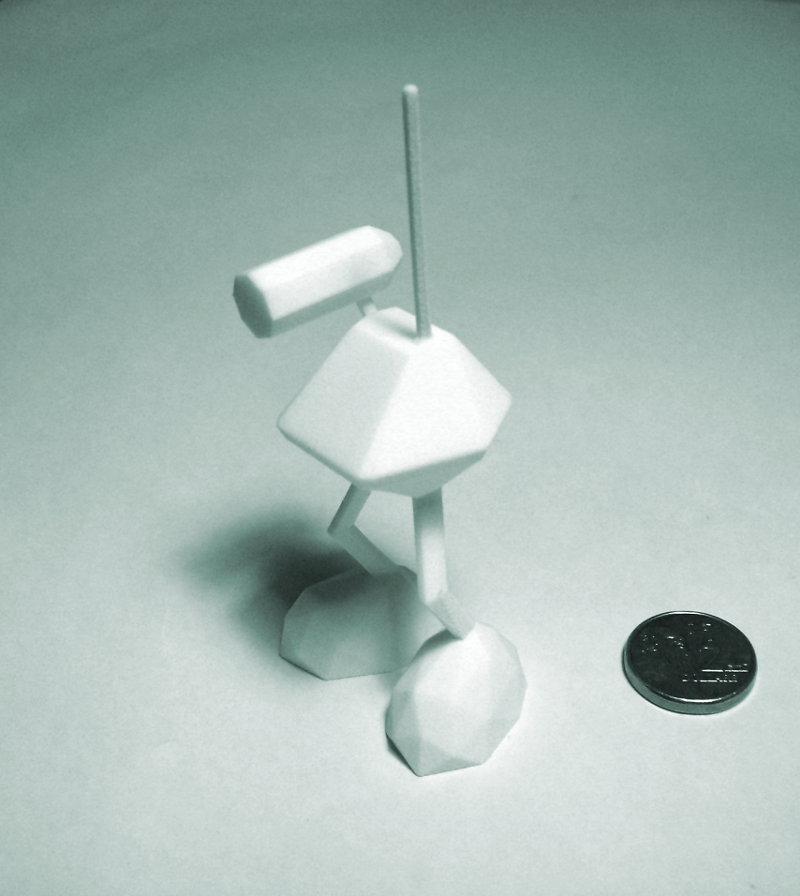
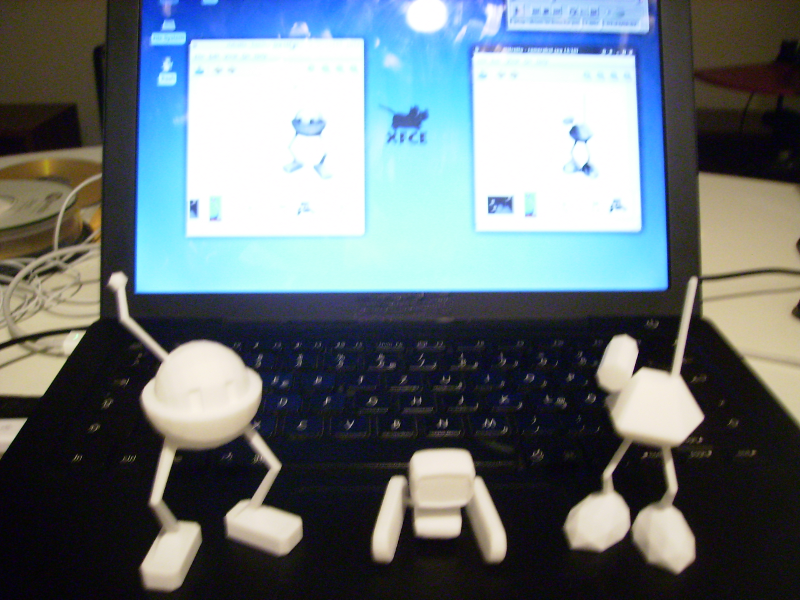
This 3d printing stuff is addictive.