
Droneship. Study in the style of thisnorthernboy.
Yesterday I released Hacksilver, an album of procedurally generated "algorave" music. Some people had questions about the technology used to write it so I thought I'd write this up.
The beats and melodies were generated using drillbit, a LISP codebase written in a Python variant called Hy. The project outputs Impulse Tracker mod files which are then played and mixed live.
The interesting parts of that codebase are in the generators folder. For example the drill-n-bass choppage generator is here.
Each generator has three functions:
make-sample-set: which generates IT wav tables that are used by
the generator (e.g. individual drum kit or synth sounds)make-pattern-settings: which sets up parameters & context that
will be re-used by the pattern generator to provide similarity across
pattern variationsmake-pattern: which outputs the pattern data in a format easily
consumed by the Impulse Tracker file writerMixing and live-effects are performed in Pure Data. Originally I was using a fully software based mixer. However I discovered that a nicer mode of operation is to have individual bits of sound generating/filter hardware chained together. So I started using this Raspberry Pi based mixer + FX unit from another project to mix live.
One other bit of software in there is jsfxr which is wrapped by the LISP code and outputs 8-bit synth sounds (which are then used by the pattern generator). Because the synth definitions are simple JSON hash maps there is a fun pseudo-evolutionary technique I was able to use where you interpolate between the values of two synth definitions to generate new sounds based on two synth definitions that you like.
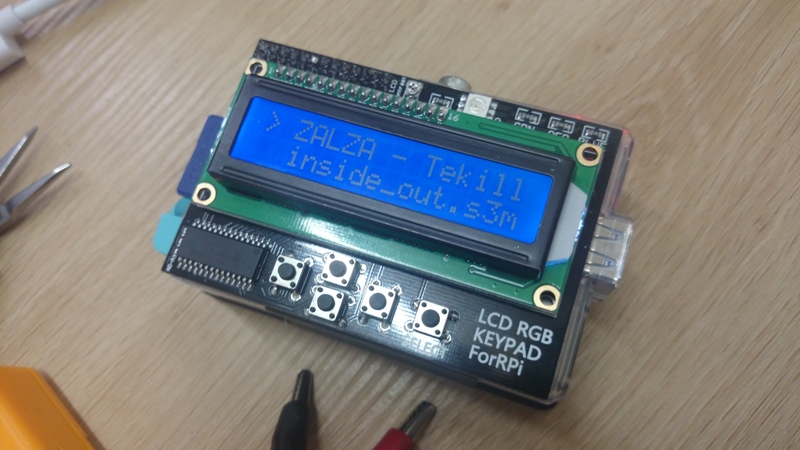
I also built a little hardware Impulse Tracker renderer based on a Raspberry Pi running XMP with my friend Dimity. It has a Pocket Operator style sync output and runs directly into the mixer that both share the same timing and the fx can be quantised to the music which is playing.
If you're interested in the music hardware that Dimity and I are building and selling you can stay updated at bzzt.studio.
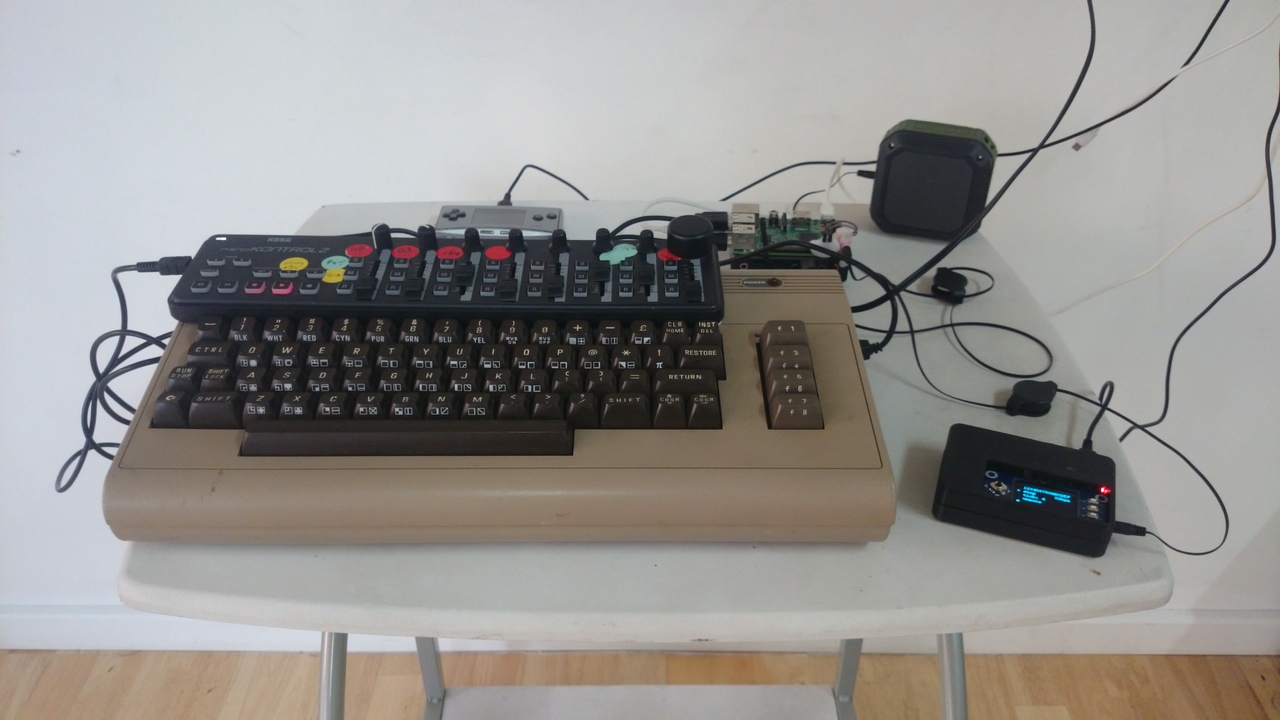
In the image at the top of this post the hardware Impulse Tracker renderer is the little box on the right hand side. The RPi mixer/fx unit is to the top right of the C64 keyboard. The Korg Nanokontrol2 strapped to the C64 keyboard is controlling the fx and mixing parameters on the RPi. They keyboard itself was for playing live synth sounds (a very simple arpeggiating subtractive synthesizer built in Pd).
I just released Hacksilver, a new album of procedurally generated music.
It uses a whole slew of weird tech to generate the beats, melodies, synth sounds including beat-generating LISP, 8-bit synth generating Javascript, and Pure Data for the mixing and mastering. One thing that was particularly fun was procedurally generating Impulse Tracker files.
Would appreciate a re-share if you know of anybody who might be into this type of thing.
Enjoy!
As part of the TOPLAP 15th Birthday live-stream I live-coded some algorithmic rave music in Speccy:
Speccy is a browser based environment for live-coding 8-bit algorithmic rave music in ClojureScript.
You can watch the videos of everybody who participated here.
Update! SVG Flipbook is an app doing flipbook-style layer animation with Inkscape.
SVG Animation Assistant is an open source companion application for Inkscape.
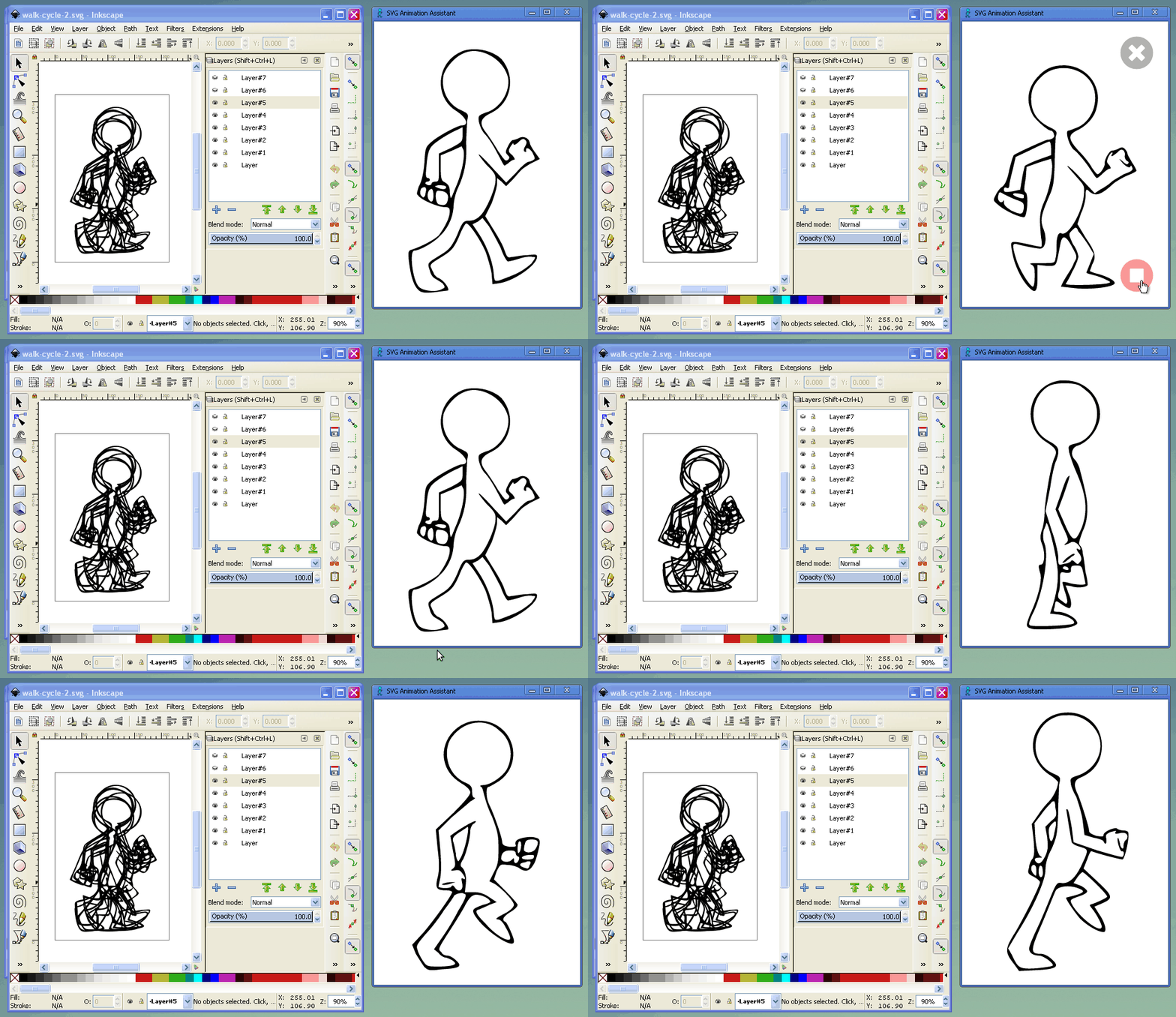
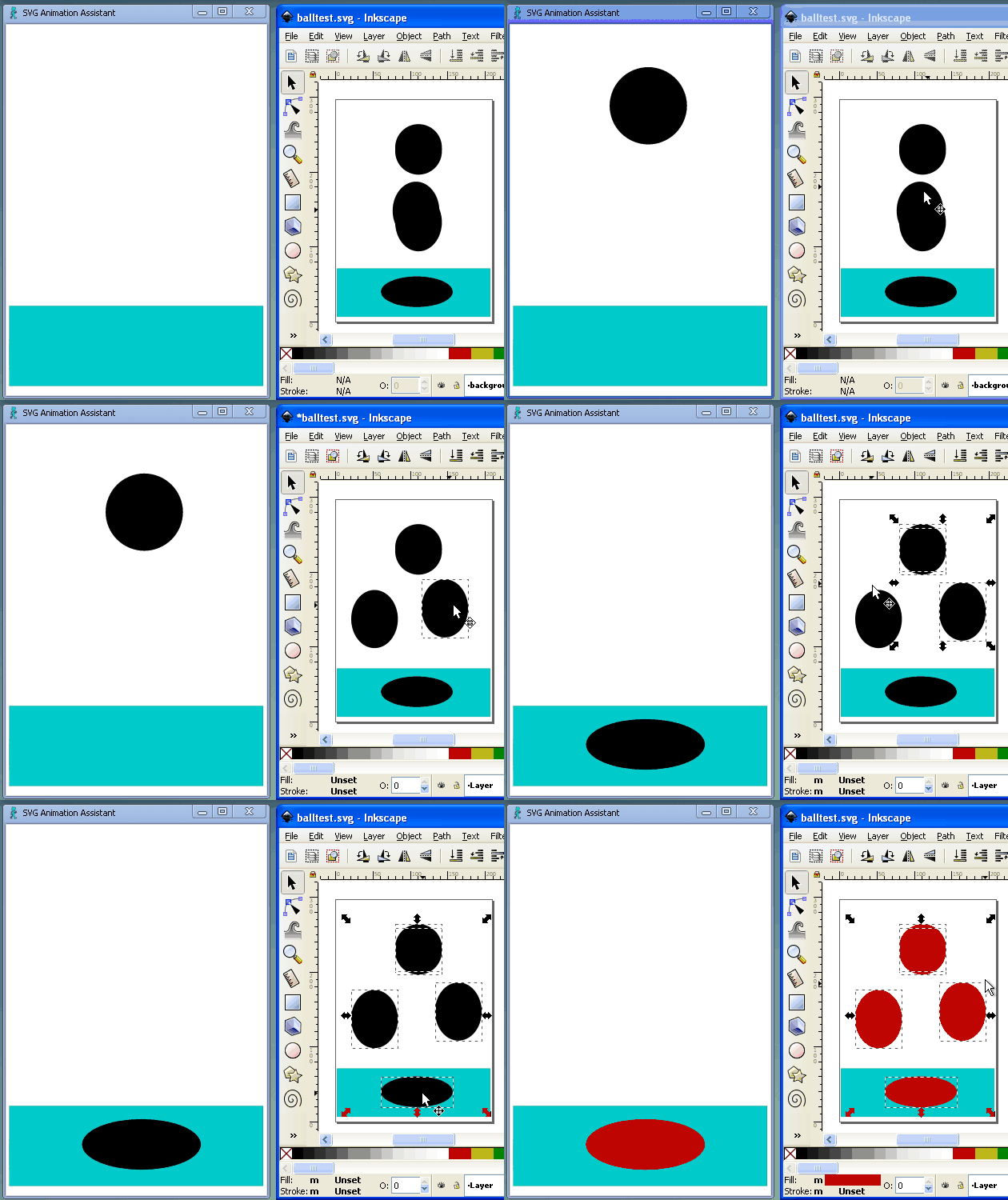
It runs along side Inkscape and helps you animate by cycling through the layers of your SVG as you edit it.
This allows you to do basic flip-book style animation. Each layer in your SVG is one frame of the animation.
Customise frame timing and behaviour by editing the layer name:
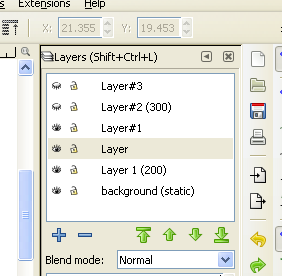
The animation live-reloads in the assistant window whenever you hit save in Inkscape.
If you are a Linux user you can use the online version of this app.
You can get the full source code to this application on GitHub.